
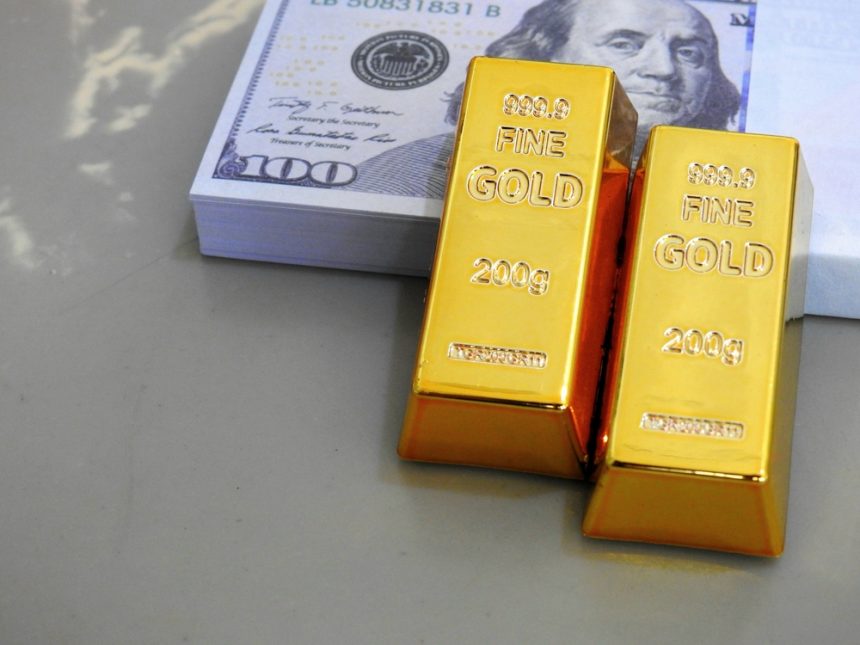
Gold suffered its steepest one-day decline since March on Friday after a much stronger-than-expected U.S. employment report sharply reduced expectations for a near-term Federal Reserve rate cut.
The stronger jobs data pushed the dollar higher and triggered a broad selloff in the metal, erasing a large portion of gold’s recent gains.
Gold Futures Fall More Than 3%
Gold futures dropped $148.00, or 3.30%, to settle at $4,353.90.
The move wiped out the gains made so far in 2026 and caused meaningful technical damage, raising questions about whether the recent bullish momentum can continue.
Jobs Report Surprises Markets
The catalyst was the Labor Department’s closely watched May nonfarm payrolls report.
The U.S. economy added 172,000 jobs last month, nearly double the 88,000 expected by economists surveyed by Bloomberg. The unemployment rate held steady at 4.3%.
Previous Months Revised Higher
The report was strengthened further by upward revisions to prior months.
April payrolls were revised to 179,000 from the previously reported 115,000, while March was upgraded to 214,000, marking the first reading above 200,000 since early 2024.
Fed Rate Cut Hopes Fade
The data quickly reshaped expectations in interest rate markets.
According to CME Group’s FedWatch tool, the probability that the Federal Open Market Committee leaves rates unchanged at its upcoming meeting has climbed to 96%, effectively ruling out an imminent policy pivot.
Dollar Strength Adds Pressure
The repricing also moved through currency markets, deepening gold’s losses.
The U.S. Dollar Index rose 0.63% to close at 100.08, reclaiming the 100 level for the first time since March.
A Stronger Dollar Weighs On Gold
Because gold is priced in dollars, a stronger greenback makes the metal more expensive for international buyers.
That usually reduces demand and can intensify selling pressure, especially when rising rate expectations also weaken the appeal of non-yielding assets.
Technical Damage Deepens
Friday’s decline was significant not only because of its size, but also because of the levels gold broke during the session.
The metal fell decisively below its 200-day simple moving average, a widely watched long-term trend indicator that had supported the recent bull run.
First Close Below 200-Day Average Since 2023
Friday marked gold’s first close below its 200-day moving average since November 2023.
That break is likely to prompt a more cautious reassessment from technical traders and institutional investors who had used that level as a key support reference.
Bears Take Short-Term Control
The selloff gives gold bears control in the near term, especially as the market adjusts to stronger economic data and a less dovish Federal Reserve outlook.
For bullish momentum to return, gold may need either weaker U.S. data, a softer dollar or renewed expectations that the Fed could move toward rate cuts later in the year.
Trend Reversal Or Correction?
The main question now is whether Friday’s move marks the start of a deeper trend reversal or a sharp correction within a longer-term bull market.
That answer will depend largely on incoming economic data and how it shapes the Fed’s policy path in the coming weeks. For now, the stronger labor market, firmer dollar and broken technical support have shifted momentum against gold.