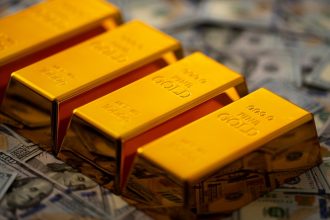

Gold has experienced a volatile year in 2026, but recent gains have renewed investor interest as concerns over inflation, interest rates and global economic uncertainty continue to support demand for the precious metal.
Gold Recovers After Volatile Trading
Gold prices have been difficult to predict this year, falling as much as 18% after reaching a record above $5,300 per ounce earlier in 2026. However, the metal recorded its strongest weekly performance since January, while gold mining stocks posted their best five-day run since 2008.
Despite recent volatility, gold remains significantly higher compared with a year ago, gaining more than $1,000 per ounce over the past 12 months.
Some investors believe the recent upward trend could continue as concerns over government spending, inflation and economic growth continue to influence market sentiment.
Inflation and Central Bank Buying Support Demand
Investors continue to turn to gold as a store of value amid concerns over fiscal spending, weaker global growth and uncertainty surrounding monetary policy.
Former U.S. economic adviser Pippa Malmgren said concerns over inflation and government spending have encouraged investors to seek traditional assets that can preserve wealth.
Central banks have also continued increasing their gold reserves. China’s central bank has maintained a long period of gold accumulation, adding further support to demand for the precious metal.
Gold fund managers including John Paulson have argued that the metal remains in the early stages of a long-term bull market, driven by concerns over currencies and government debt.
Interest Rates Remain Key Driver
Analysts say recent gold gains are not driven only by fear but also by changing expectations around interest rates and economic conditions.
Joe Cavatoni of the World Gold Council noted that gold has benefited from expectations that the Federal Reserve may avoid further rate increases following weaker employment data and moderate inflation figures.
Lower expectations for rate hikes typically support gold by reducing pressure from higher-yielding assets and weakening demand for the U.S. dollar.
However, analysts caution that declining expectations for rate increases do not necessarily mean the Federal Reserve is preparing to cut rates. The current environment remains different from a traditional rate-cutting cycle.
Gold Mining Stocks Attract Investors
Investors have also increased exposure to gold mining companies as they search for opportunities within equity markets.
Mining stocks can provide additional leverage when gold prices rise because production costs may remain stable while revenues increase. However, they also carry greater volatility compared with holding physical gold or gold-backed funds.
Popular investment options include gold ETFs such as SPDR Gold Shares (GLD), iShares Gold Trust (IAU), and mining-focused funds including VanEck Gold Miners ETF (GDX) and VanEck Junior Gold Miners ETF (GDXJ).
Future Outlook for Gold Prices
Analysts expect volatility to remain elevated as investors monitor upcoming Federal Reserve decisions, economic data and global geopolitical developments.
Uncertainty surrounding monetary policy and inflation expectations could continue supporting demand for gold as a portfolio diversification tool.
Continued physical demand from major markets including China and India may also provide additional support. Some analysts believe gold could eventually exceed its previous highs if current economic and geopolitical factors continue.