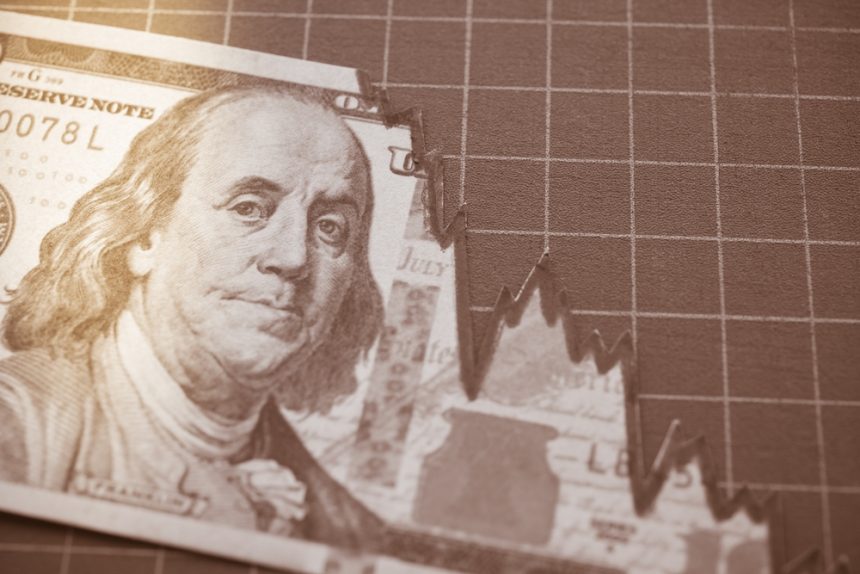
The dollar weakened on Friday as two developments pushed investors to trim support for the U.S. currency. The first was the Justice Department’s decision to close its investigation into Federal Reserve Chair Jerome Powell. The second was a fresh wave of optimism that talks linked to ending the U.S.-Israeli war with Iran could still move forward.
Together, those developments gave the market a slightly more dovish interpretation of the U.S. outlook. Investors increasingly viewed the end of the Powell probe as removing a major obstacle for Kevin Warsh, President Trump’s preferred choice to lead the central bank. At the same time, even tentative diplomatic movement around Iran reduced part of the safe-haven demand that had recently supported the dollar.
The move was not large enough to signal a complete trend reversal, but it was important. It showed once again that the dollar is being pulled by a combination of monetary policy expectations and geopolitical headlines, with neither side fully dominating for long.
The Powell Decision Shifted The Fed Narrative
The end of the Powell investigation mattered because markets immediately began linking it to the future leadership of the Federal Reserve. If Warsh is now seen as having a clearer path, traders naturally start asking how his policy preferences might differ from Powell’s.
That is where the dovish interpretation comes in. Some investors believe Warsh could put more weight on inflation measures that currently look softer than the core figures Powell has emphasized. If so, he may be more open to cutting rates than Powell would have been under similar circumstances.
That possibility was enough to move rate expectations and put pressure on the dollar, even before any actual policy change has happened.
Rate Cut Expectations Moved Higher
As the market digested the political implications of the DOJ decision, traders increased the probability of a U.S. rate cut by the end of the year. That matters because currencies react quickly to even modest changes in interest-rate expectations.
When traders think the Federal Reserve may become more willing to ease, the dollar tends to lose part of its support. Higher rates have been one of the greenback’s main advantages for much of the past cycle, so any sign that this advantage could narrow is immediately reflected in foreign exchange markets.
This is why Friday’s move was about more than politics. It was really about how politics might alter the future path of monetary policy.
Iran Diplomacy Also Reduced Safe-Haven Demand
The dollar also came under pressure from the geopolitical side. Reports that diplomatic contact involving Iran could resume helped reduce part of the fear premium that had recently favored the U.S. currency.
Even though there was no confirmed breakthrough and no immediate meeting between Iranian and U.S. negotiators, the market responded to the possibility that the standoff might not be hardening further for now. In foreign exchange, that can be enough. When tensions appear to ease, however slightly, some investors become less eager to sit in the dollar for safety.
This does not mean the geopolitical risk has disappeared. It simply means the market was willing to remove a small part of the defensive positioning that had built up around the conflict.
The Dollar Is Being Pulled In Two Directions
The broader pattern remains complicated. Throughout the conflict, the dollar has moved up and down depending on which narrative is stronger at any given moment. At times it has benefited from safe-haven buying when the war looked more threatening. At other times it has slipped when investors believed diplomacy might regain momentum.
This is why the currency market has remained relatively range-bound. Traders have been reluctant to build large positions because the outlook can shift quickly with one political development, one military incident or one unexpected policy signal.
Friday’s decline fits that pattern. The dollar weakened, but not because the market has suddenly become confident about peace or about a major shift from the Fed. It weakened because the balance of immediate risks moved slightly against it.
The Euro, Sterling And Yen Found Some Room To Rise
As the dollar softened, other major currencies pushed higher. The euro gained ground, sterling also advanced and the yen strengthened modestly against the greenback. The move was broad enough to show that the pressure was primarily on the dollar side rather than being driven by a single strong alternative currency.
That matters because it suggests the market was responding to a change in U.S. assumptions more than to a sudden burst of confidence in Europe, Britain or Japan. The dollar was being marked down, not because everything else suddenly looked strong, but because its own near-term support had weakened somewhat.
In other words, this was more a dollar story than a global optimism story.
Central Banks Are About To Become The Main Theme
Looking ahead, attention is likely to shift away from the latest Iran headline and toward the coming run of central bank meetings. The Federal Reserve, the European Central Bank, the Bank of England and the Bank of Japan are all set to take important policy decisions, and that could soon become the dominant driver in currencies.
If markets start to focus more on divergence between central banks, then the next major move in the dollar may depend less on war news and more on whether the Fed is seen as easing while others stay tighter or even lean toward hikes. That would create a very different environment from the one that has dominated recent weeks.
For now, though, the shift is only beginning. The dollar remains highly sensitive to both themes at once.
The Market Is Still Far From A Clear Conclusion
The key point is that Friday’s softer dollar does not settle anything. It reflects a temporary adjustment to new information, not a final judgment about Fed leadership or the future of the Iran conflict.
If diplomacy breaks down again, the dollar could quickly recover on safe-haven demand. If the market becomes even more convinced that the Fed will turn more dovish, the pressure could deepen. Both paths remain open, and that is why traders are still cautious about taking oversized positions.
For the moment, the dollar has lost some support. But the bigger story remains unresolved, and the next move will likely depend on whether politics, geopolitics or central banks take the lead from here.