Crude Extends Its Sharp Rally
Oil prices continued to rise on Tuesday as renewed tension around the Strait of Hormuz kept energy markets on edge. Brent crude, the international benchmark, briefly climbed to 87 dollars per barrel, its highest level since June. U.S. crude also advanced, reaching as much as 81 dollars per barrel during the session.
Prices Ease After Trump Drops Fee Plan
The rally moderated slightly after President Donald Trump said on social media that he was abandoning a proposed Strait of Hormuz “reimbursement fee”. The plan had drawn criticism because it was widely viewed as conflicting with international maritime law.
Brent and WTI Still Finish Higher
Despite the pullback from intraday highs, crude ended the day with solid gains. U.S. crude closed up 1.5% at 79.34 dollars per barrel, while Brent settled 1.7% higher at 84.32 dollars.
Oil Up More Than 10% Since Sunday
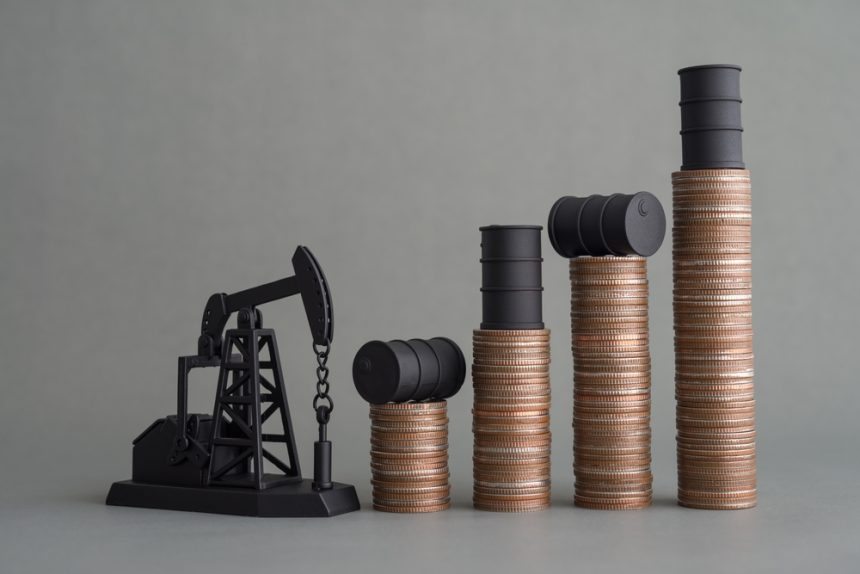
Both major oil benchmarks have risen by more than 10% since trading opened on Sunday night. Since the start of the year, crude prices are now up roughly 40%, reflecting a powerful combination of geopolitical risk, supply concerns and market repositioning.
Fee Proposal Draws Legal Pushback
Trump’s proposed toll faced immediate criticism. The International Maritime Organization said there was “no legal basis” for the measure. Hapag-Lloyd, one of the world’s largest shipping companies, also rejected the idea, saying it would be fundamentally wrong to charge fees for passage through international waters.
U.S. Blockade Returns to the Strait
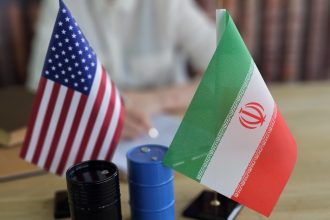
The U.S. military is reimposing a blockade on Iranian ports and ships in the Strait of Hormuz. The measure is scheduled to take effect at 4 p.m. ET, adding another layer of uncertainty to one of the world’s most important energy shipping corridors.
Renewed Strikes Add to Market Tension
Fresh attacks between U.S. and Iranian forces have further unsettled oil markets. The U.S. military said Monday night that it had struck military targets across Iran, including Bushehr, Chah Bahar, Jask, Konarak, Abu Musa and Bandar Abbas, with the aim of weakening Iran’s ability to attack commercial shipping.
Analysts See Blockade as Major Market Driver
ING commodities analysts said the renewed U.S. blockade is more significant for markets than the earlier suspension of the sanction waiver on Iranian oil. Their assessment suggests traders are now focused less on formal sanctions and more on the practical risks facing ships moving through the region.
June Agreement Looks Increasingly Fragile
The return of the blockade has also cast further doubt on the mid-June memorandum of understanding between Trump and Iranian officials. The agreement had been presented as a step toward ending the combat phase of the conflict, but analysts now see it as increasingly weakened.
Shipping Traffic Falls Sharply
Commercial shipping through the Strait of Hormuz continues to decline as vessel operators respond to renewed fighting and the breakdown of secure passage. Kpler data showed that 19 ships crossed the waterway on Friday, rising to 24 on Saturday before falling to just 10 on Monday.
Open Strait Claims Fail to Reassure Ships
Although Washington continues to say the Strait of Hormuz remains open, the drop in vessel traffic suggests shipping companies are acting cautiously. ING analysts noted that official assurances offer limited comfort when the risk of attack is rising.
Energy Markets Watch Every Hormuz Signal
The latest moves show how sensitive crude prices remain to developments in the Gulf. With the U.S. blockade returning, Iranian tensions rising and vessel crossings slowing, traders are pricing in a greater risk of disruption to oil flows through the Strait of Hormuz.