Crude markets react to signs of possible de-escalation
Oil prices dropped sharply as investors reacted to hopes that a pause in attacks between the United States and Iran could help reduce tensions in the Middle East conflict.
Brent crude, the global benchmark for oil prices, fell more than 9% at one point to $87.59 per barrel, reversing a significant rise from the previous week when prices briefly climbed above $100.
The decline came after the US ambassador to the United Nations said attacks against Iran had stopped for a second consecutive night, allowing “talks some space” to continue.
An Iranian military spokesperson also confirmed that Tehran had paused retaliatory attacks in the region in response to the halt in hostilities.
Hormuz remains central to global energy concerns
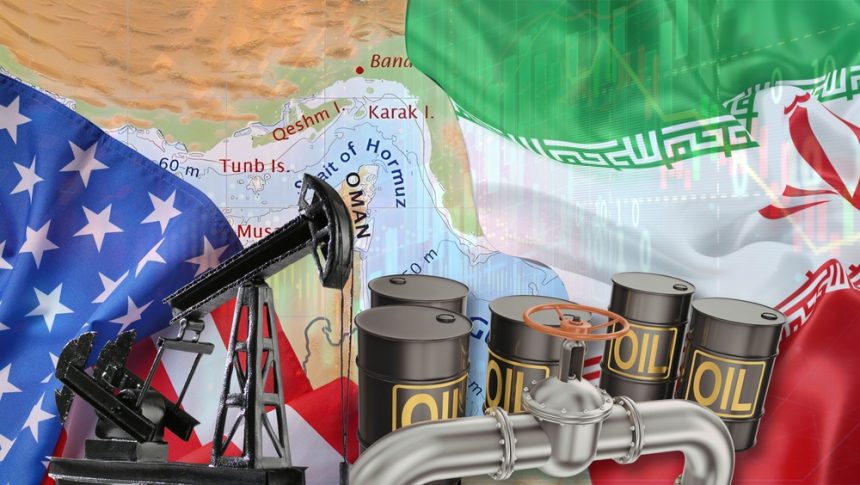
The conflict between the US and Iran caused oil prices to surge after military action effectively disrupted traffic through the Strait of Hormuz, one of the world’s most important energy routes.
The strait typically carries around 20% of global oil and liquefied natural gas (LNG) shipments, making any prolonged disruption a major risk for global energy markets.
When Iran and the US signed a memorandum of understanding in June to suspend military operations and reopen the waterway, oil prices quickly returned to pre-conflict levels of around $70 per barrel.
However, the collapse of that agreement earlier this month renewed concerns over global energy supplies and pushed prices higher again.
Oil had reached $100 before the latest decline
Last week, Brent crude surpassed $100 per barrel for the first time since May, with additional pressure coming from attacks by Houthi forces in Yemen on oil tankers in the Red Sea.
The attacks threatened another important export route that Saudi Arabia has used to transport crude while avoiding reliance on the Strait of Hormuz.
Susannah Streeter, chief investment strategist at Wealth Club, said markets remain cautious because of the uncertainty surrounding the conflict.
“There is still significant uncertainty baked into these prices and a reticence about whether negotiations will lead to a lasting breakthrough,” she said.
European gas supplies face continued pressure
Although oil prices have fallen, concerns remain over natural gas markets. Wholesale gas prices have increased recently, while research group Wood Mackenzie warned that European gas storage levels are historically low.
The group said energy security for the coming winter could be at risk if supply disruptions continue.
If the Strait of Hormuz remains closed for another two months, European gas storage levels could fall below 70% by November 1, compared with a five-year average of 90% for the same period.
Massimo Di Odoardo, vice president of gas and LNG research at Wood Mackenzie, said low European inventories, strong Asian demand and limited LNG supply growth could keep prices elevated through the winter and into 2027.
Energy costs could affect inflation and interest rates
The US-Iran conflict has also increased fuel costs, including petrol and diesel prices, in many countries.
Higher energy costs often spread through the economy as businesses pass increased expenses on to consumers, contributing to higher inflation.
Rising inflation can increase pressure on central banks to raise interest rates in order to control price growth.
Central banks reassess rate expectations
The European Central Bank raised its key interest rate in June for the first time in almost three years, highlighting that the Middle East conflict was creating additional inflationary pressures.
Before the escalation with Iran, markets expected the Bank of England to cut interest rates this year. However, expectations have shifted, with investors now pricing in the possibility of a rate increase later in the year.
The Bank of England is scheduled to hold its latest monetary policy meeting this week and is widely expected to leave its benchmark interest rate unchanged at 3.75%.