
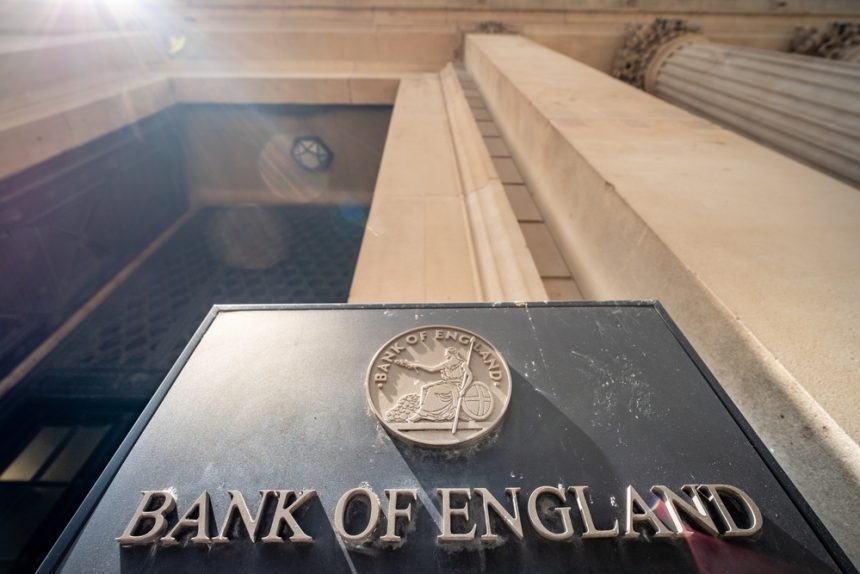
Policy Stays On Hold Amid War Uncertainty
The Bank of England kept its base interest rate unchanged at 3.75% as policymakers weighed the economic uncertainty created by the war in the Middle East. The decision reflected concern that higher energy prices could keep inflation elevated while also increasing the risk of weaker growth.
Eight members of the nine person Monetary Policy Committee voted to hold rates steady, while one member supported an increase to 4%. The vote shows that the Bank is not ready to resume rate cuts, but also remains cautious about tightening policy further before the full impact of the conflict is clearer.
Inflation Risk Moves Higher
The Bank warned that UK inflation could reach 6.2% if the Middle East energy shock worsens. That scenario would complicate the outlook for households, businesses and financial markets, especially after inflation already rose to 3.3% in March, a three month high.
The rise in March was driven largely by higher motor fuel and transport costs. With Brent crude trading around 126 dollars a barrel on Thursday, energy remains the main channel through which the conflict is feeding into the UK economy.
Bailey Signals Caution From The Bank
Bank of England Governor Andrew Bailey said borrowing costs are in a reasonable place given the state of the economy and the unpredictability of events in the Middle East. He added that policymakers are watching the war’s impact on the UK very closely.
The Bank said several economic paths remain possible. In a worst case scenario, further rate increases could be required, while the risk of recession would also rise. That leaves the central bank managing a difficult balance between controlling inflation and avoiding unnecessary damage to growth.
Reeves Frames The Conflict As An Economic Test
Chancellor Rachel Reeves said the Iran conflict is not Britain’s war, but is one the UK must respond to. She said every decision would be aimed at keeping costs down for families and businesses without repeating past mistakes that led to higher inflation and higher interest rates.
Reeves argued that the UK entered the crisis in a stronger position because of previous choices to build economic stability. She also said ministers are working to strengthen energy security, support British industry and protect households.
Mortgages, Savings And Credit Stay In Focus
The rate decision matters directly for households. For savers, holding the base rate steady is broadly positive because returns are unlikely to fall and could edge higher. For borrowers, the outlook is more difficult, with mortgage, loan and credit card costs likely to remain elevated.
Before the war began on February 28, markets had expected the Bank to cut rates to 3.5%. That expectation has now been pushed back as energy prices, shipping costs and inflation pressures cloud the outlook.
Markets Reprice The Rate Path
Economists had widely expected the Bank to hold rates, arguing it was too soon to raise borrowing costs again while the impact of the Iran conflict remains uncertain. Still, markets are now pricing in the possibility of multiple rate hikes by the end of the year.
Analysts warned that higher energy costs could spread through the economy via transport, freight, packaging and food production. Core inflation eased to 3.1% in March, but services inflation rose to 4.5%, keeping pressure on policymakers. For investors, the message is clear: the Bank of England’s path is now tied closely to oil prices, inflation expectations and the duration of the Middle East conflict.