
First increase since September 2023
The European Central Bank has raised interest rates across the eurozone for the first time in nearly three years as higher energy costs revive inflation concerns.
The ECB’s Governing Council approved a 25-basis-point increase after annual consumer price inflation climbed to 3.2% in May 2026, up from 3% in April and well above the central bank’s 2% target.
Middle East conflict drives the decision
Policymakers linked the increase to the economic consequences of the war in the Middle East, which has pushed energy prices higher and created fresh pressure on household and business costs.
The ECB said its decision remained appropriate under several possible scenarios for how the conflict and the resulting energy shock could develop.
Officials are particularly concerned that manufacturers and retailers may pass higher costs on to consumers during the summer and autumn to protect their margins.
Deposit rate rises to 2.25%
The interest rate on the ECB’s deposit facility will increase from 2% to 2.25%.
This is the rate paid to commercial banks when they place money overnight with the Eurosystem and is generally considered the ECB’s most important policy rate.
Main refinancing rate reaches 2.4%
The rate on the ECB’s main refinancing operations will rise from 2.15% to 2.4%.
Commercial banks use these operations to obtain regular funding from the central bank, meaning the increase could eventually contribute to higher borrowing costs for businesses and households.
Marginal lending rate moves to 2.65%
The marginal lending facility rate will increase from 2.4% to 2.65%.
This facility provides overnight credit to banks and normally carries a higher rate than the ECB’s standard refinancing operations.
Markets expect more increases
Financial markets currently expect the latest move to be the beginning of a limited sequence of rate increases.
Investors are pricing in the possibility of three increases by next spring, although the final path will depend heavily on energy prices, inflation data and the duration of the Middle East conflict.
Lagarde stresses exceptional uncertainty
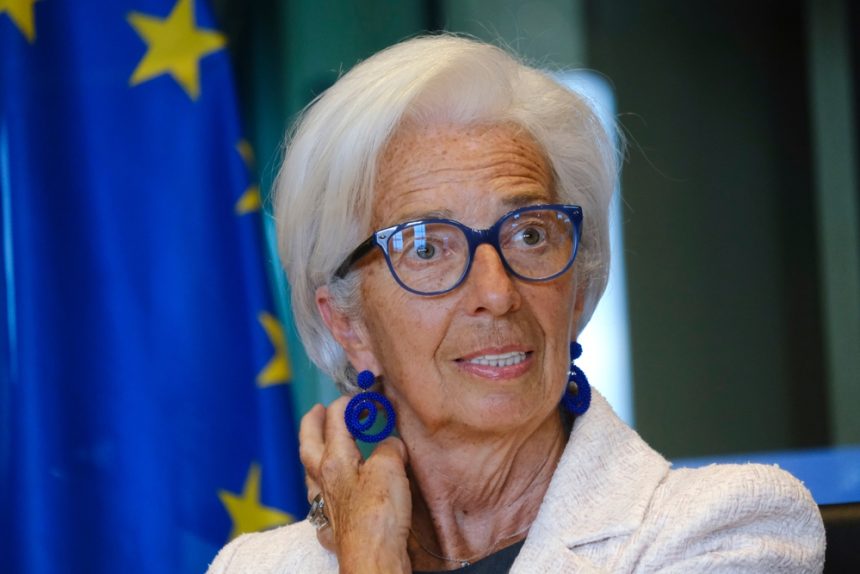
ECB President Christine Lagarde said the outlook for both inflation and economic growth remained highly uncertain.
She explained that the longer-term impact would depend on the severity and duration of the energy price shock, as well as the extent to which the initial increase spreads through wages, production costs and consumer prices.
Risk of indirect inflation effects
The central bank is watching for signs that expensive energy is affecting a wider range of goods and services.
If businesses raise prices and workers demand higher wages to compensate for the increased cost of living, inflation could become more persistent and require additional monetary tightening.
Growth risks complicate the response
Higher interest rates may help contain inflation, but they can also weaken investment, consumer spending and economic activity.
The ECB must therefore balance the need to control prices against the risk that the energy shock and more expensive credit could further slow the eurozone economy.
No fixed path for monetary policy
Although further increases are expected, the ECB has avoided committing to a predetermined schedule.
Future decisions will be based on incoming inflation figures, the strength of the economy and evidence of whether the energy shock is producing lasting price pressures.
The quarter-point increase signals that the ECB is prepared to act, while preserving flexibility in an environment shaped by war, volatile energy markets and uncertain growth.